
What Is The R-value Of Spray Foam Roofing Insulation?
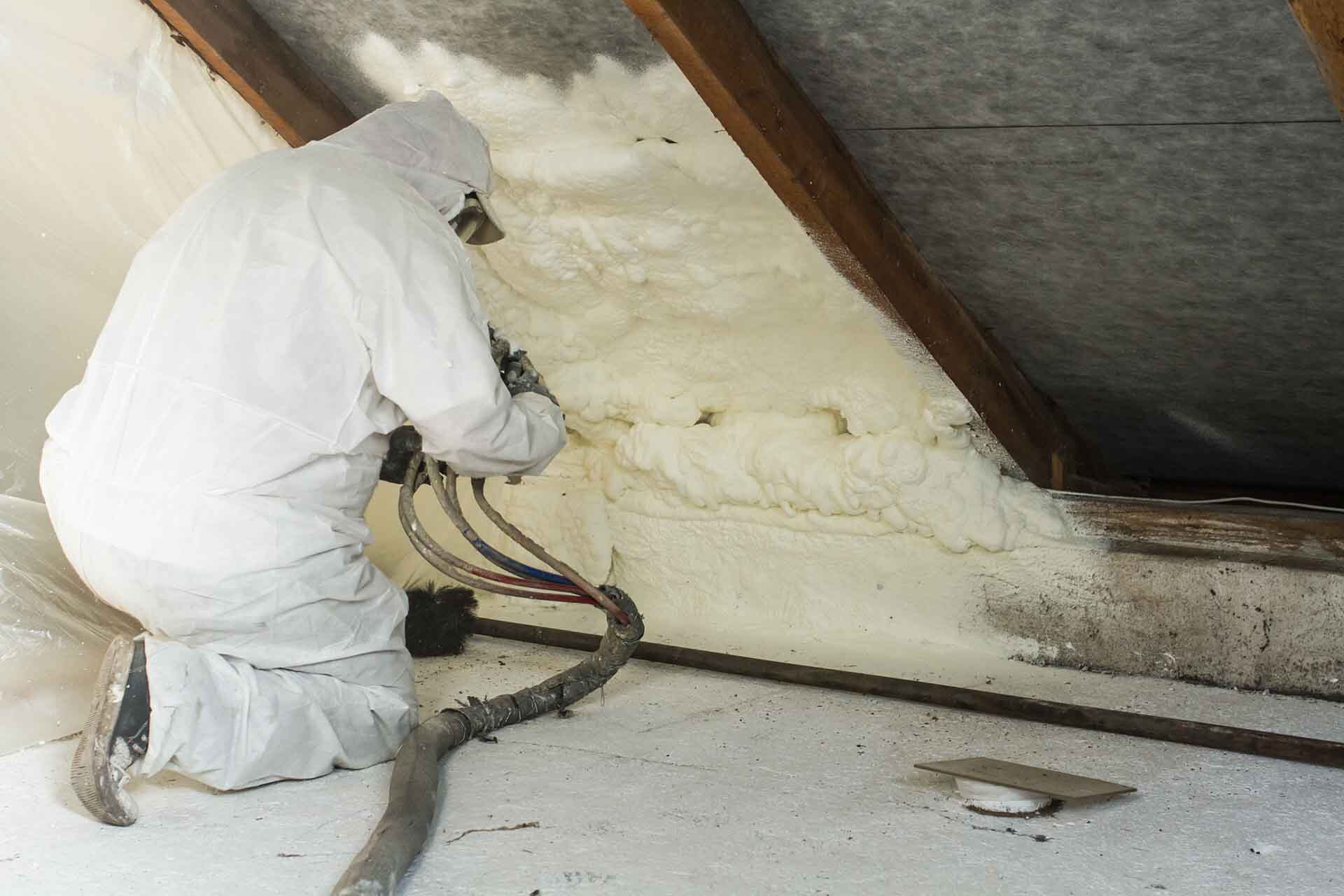
Does your commercial or industrial building feel like an oven in summer or chill you to the bone in winter? If so, your roof might not be doing its job when it comes to insulation!
As an experienced roofer, one of the most common questions we get is: “How do I stop my HVAC from running 24/7?”
In most cases, Spray Foam Roofing is the answer to this question as it is the common energy-saving solution for flat roofs. When people hear terms like R-value, thickness, and energy efficiency, it gets a little confusing. It is natural to wonder – How much R-value do I actually need for my roof to save on energy bills?
Don’t worry, in this blog, we’ll answer your queries to clear all your doubts regarding SPF roofing and its R-value, so you can make the right decision for your building.
What Is R-Value And Why Is It Important?
In simple words, R-value is a measurement of how well a material prevents heat from passing through it.
R stands for thermal resistance. The higher the R-value, the better the insulation. But how well the insulation works to keep your space comfortable is more important.
Have you ever used insulation that was supposed to be good, but your building still felt cold or drafty? That often happens with materials like fiberglass batts. Even with a decent R-value, they leave small gaps where air can sneak in.
Spray foam works differently. It expands and seals those gaps as it’s applied, creating a tight, continuous layer. So instead of just slowing heat transfer, it also blocks air leaks, which is why it performs better in everyday conditions.
What Is the R-Value of Spray Foam Roofing Insulation?
Spray foam insulation is known for having one of the highest R-values per inch compared to traditional roofing insulation materials. Spray foam comes in open-cell and closed-cell varieties.
- When we talk about spray foam for roofs, we are almost always talking about Closed-Cell Polyurethane Foam. This is a dense, rigid material that serves as both your insulation and your actual roof surface. Closed-cell spray foam offers an R-value of 6.5 to 7.0 per inch.
- Open-cell offers R-3.5 to 3.8 per inch. It’s lightweight and great for soundproofing interiors, but it soaks up moisture like a sponge, risking rot on roofs.
- Similarly, other traditional blown-in cellulose or fiberglass usually have an R-value of around 3.0 to 3.7 per inch.
That means closed-cell spray foam is roughly twice as effective at half the thickness.
| Want better roof insulation? Contact Us today to get expert advice and a custom solution. |
Why Spray Foam Works So Well for Roofing?
If we only looked at the numbers, you might think, “Okay, it’s twice as good.” But in reality, spray foam performs even better than its R-value suggests.
1. The Air Seal Advantage
Most traditional insulation lets air pass through it. It may slow down the heat, but it doesn’t stop air from moving. So even a small crack in your roof can let hot air sneak inside.
Spray foam expands to fill small gaps and cracks, creating a tight seal that stops air from getting in or out. This keeps your commercial or industrial building comfortable in every season.
2. No Thermal Bridging
In many roofs, heat can still pass through the wooden beams, even if insulation is added. That’s because heat travels through solid materials like wood.
Spray foam roofing covers the entire roof in one smooth, continuous layer. There are no gaps or seams for heat to slip through. It’s like putting one solid lid over your building that helps keep the heat out in summer and the warmth in during winter.
3. Reflectivity (The Cool Roof Factor)
Top roofing companies usually finish Spray Foam roofing with a white, UV-resistant silicone coating.
The spray foam provides insulation by slowing down heat, while the coating reflects sunlight away from the roof. This combination helps keep the building cooler because less heat is absorbed, and the remaining heat is blocked from entering inside.
Together, insulation and reflectivity work as a team to improve comfort and reduce cooling costs.
How Thick Does Spray Foam Roofing Need to Be?
| Spray Foam Thickness | Approx. R-Value |
| 1 inch | R-6 to R-6.5 |
| 1.5 inches | R-9 to R-10 |
| 2 inches | R-12 to R-13 |
| 3 inches | R-18 to R-19 |
It also depends on the climate zone, building type, energy goals, and local building codes. A knowledgeable roofer won’t just guess. They’ll assess your structure before recommending the right thickness of spray foam.
| Schedule Your Roof Inspection Today! |
Common Doubts People Have About Spray Foam Insulation
-
Can I just spray foam over my existing metal or concrete roof?
Spray foam can be applied over some roofing materials, but spraying it directly over old roofs without proper inspection is not the best idea. As your roof might be uneven, damaged, or loose, this makes it hard for the foam to stick properly.
For the best results, the roof surface needs to be clean, solid, and stable. When you contact an experienced roofing company, they always inspect the roof first and make sure it’s properly prepared before applying spray foam.
-
Is a higher R-value spray foam better?
Not always. A higher R-value provides stronger insulation, but other factors, like climate and building requirements, also play an important role. Moreover, proper installation, ventilation, and moisture control also impact the performance of spray foam.
In most cases, choosing the right R-value for your roof works better than simply choosing the highest one. A professional roofing expert will always consider all the factors before suggesting the required spray foam thickness.
-
Is spray foam roofing safe?
A well-installed Spray foam sticks firmly to the roof, forming a smooth, seamless layer that blocks air and water leaks. If you hire trained professionals like Foam Experts Co., who use the best application techniques and top-quality materials, the spray foam insulation is safe, durable, and a great energy-efficient upgrade for industrial and commercial buildings.
Takeaway
If you’re a commercial or industrial property owner looking for –
- High R-value performance
- Lower energy costs
- A seamless insulation system
- Long-term roof durability
Then, spray foam roofing insulation is the best choice. However, it must be applied at the right temperature and pressure, using the correct spraying method. If the foam mixture is even slightly off, it can weaken the insulation and reduce how well it performs.
This is why proper installation is so important.
Read More About:
- Why Early Roof Leak Detection is Critical for Foam Roofs
- How to Fix Roof Leak Around Chimney?
- Can Spray Foam Insulation be Applied Directly to Roof Deck
- How Does a Drainage System Function on a Commercial Flat Roof?
Get Expert Help with Spray Foam Roofing at Foam Experts Co. in Redding
With over 40 years of experience, quality workmanship, and deep knowledge of the local climate, Foam Experts Co. is the top roofing contractor in Redding and across Northern California.
We aren’t just installers; we’re your neighbors. We understand the Redding climate, the local building codes, and exactly how much R-value you need to keep your commercial or industrial property comfortable year-round.
Our team inspects the roof for current insulation levels, any damage on its surface, identifies problem areas, and recommends the right spray foam solution based on your roof’s condition and energy needs.
Call us today at 800-281-0313 to get a free quote!