
Poor Roof Insulation Can Leave Your Building Hot Even With AC On
Have you noticed that even when your AC runs all day, and you have also lowered the thermostat settings, your building still feels warm or hot?
If you’ve already spent money on seasonal AC maintenance, then the problem is not your air conditioner. It could be your roof insulation failing. Poor roof insulation allows outside heat to enter your building constantly. That means your AC has to work harder, energy bills go up, and your indoor comfort drops. This is more common in places like Redding, where summer temperatures regularly rise above 100°F.
This blog explains why this happens, how to spot the signs of failing insulation, and what you can do to bring back your comfort.
Why Your AC Alone Can’t Fight a Failing Roof
If your AC seems to run non-stop but your building never cools efficiently, heat is probably entering faster than your system can remove it. One of the biggest reasons behind this is poor or failing roof insulation.
- The sun heats your roof surface, which can reach 150°F or more in summers.
- That heat radiates into your attic or roof space.
- Old, compressed, or damaged insulation fails to block it.
- Heat seeps into your conditioned space through the ceiling.
- Your AC takes an extra load, works harder, while your building still struggles to stay cool.
Why Do Cities Like Redding Face This Issue More Often
If you live in Redding, you know that it’s one of the hottest cities in California.
That means your insulation is under stress for longer periods than almost anywhere else in the state. Constant UV exposure degrades roofing materials over time. The relentless heat cycles cause expansion and contraction which can gradually reduce the effectiveness of traditional insulation systems. On top of that, many buildings in Northern California are decades old, and their insulation might not have been upgraded for years.
| Schedule Your Roof Inspection Today – Call Now |
Signs Your Roof Insulation Is Failing
1. Your AC Runs Constantly, But You Still Feel Warm
Most people assume the AC just needs to be checked when the building does not feel cool enough. If your HVAC system runs non-stop but struggles to maintain the set temperature, the problem is usually the heat entering from the roof, not the cooling equipment itself.
2. Rooms on the Top Floor Are Noticeably Hotter
If you notice that during summer, your upper floor or the space directly beneath the roof feels 5-10 degrees warmer than the rest of the building, it’s a warning sign. That temperature difference suggests that the insulation is no longer blocking heat transfer.
3. Your Energy Bills Increase Rapidly
When insulation degrades, your HVAC system has to run longer and work harder. As a result, your energy bills begin to rise. If your summer electricity costs have spiked without a clear reason, your roof’s thermal performance deserves a serious professional inspection.
4. You Can See Visible Signs of Roof Damage
If your roofing material seems cracked or damaged, you spot water stains on ceilings, bubbling roof coatings, or areas where the roof surface looks worn out, it points to underlying roofing or insulation damage.
5. Moisture, Mold, or Musty Smells
When old insulation absorbs water from a roof leak or condensation, it loses its insulating power immediately. It also becomes a breeding ground for mold. If you’ve noticed musty odors or visible staining, have your insulation inspected, as the issue may be much bigger than just a smell.
6. Pest Activity in the Roof Space
Rodents and insects often burrow through or nest inside insulation, creating tunnels and compressing the material so it loses its air-pocket structure. If you’ve had pest issues in your attic or roof space, your insulation likely needs to be removed, sanitized, upgraded, or replaced.
Common Insulation Materials and Their Lifespans
In today’s roofing insulation market, various insulation materials are available, but each one is different in terms of longevity and R-value.
| Insulation Type | Average Lifespan | R-Value Per Inch |
| Fiberglass Batt | 15-25 years | 3.0-3.7 |
| Cellulose (Blown-in) | 15-20 years | 3.2-3.8 |
| Rigid Foam Board | 25-40 years | 3.8-6.5 |
| Closed-Cell Spray Foam | 80+ years | 6.5-7.0 |
| Open-Cell Spray Foam | 20-30 years | 3.5-3.8 |
Closed-cell spray foam delivers twice the thermal resistance at the same thickness, and it doesn’t even sag, settle, or absorb moisture. That’s why experienced roofing contractors increasingly recommend spray polyurethane foam (SPF) as the high-performance alternative for roof insulation.
Why Spray Foam Roofing Is a Game-Changer for Buildings
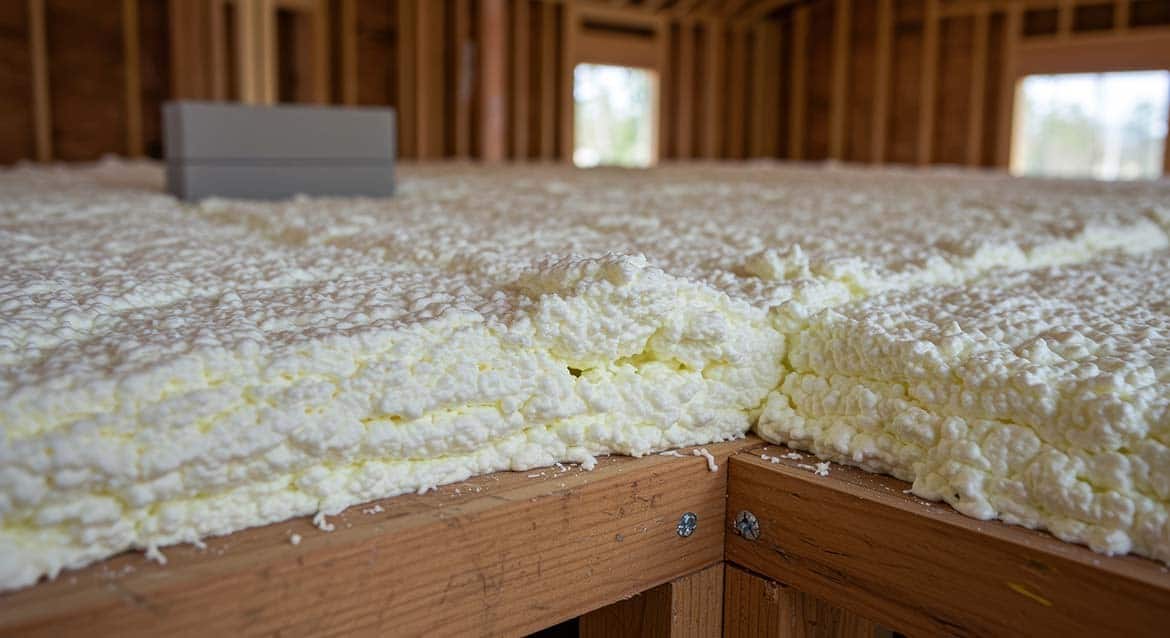
Spray polyurethane foam (SPF) is applied in liquid form and expands up to 20 times its volume as it cures, forming a dense, rigid, seamless layer across the entire roof surface. Unlike traditional insulation that is often installed in sections with seams and gaps, spray foam provides a continuous thermal and air barrier.
Benefits of Installing SPF Roofing
- Heat can’t pass through fasteners, seams, or gaps.
- Only one correct application handles both insulation and air barrier; no separate step is needed.
- Closed-cell spray foam delivers R-6.5 per inch. Three inches gives you approximately R-19.5, and it holds that value over time.
- A properly coated SPF roof is watertight and won’t absorb moisture.
- With proper maintenance and recoating every 15-20 years, a spray foam roof can last the lifetime of the building.
To enjoy all the benefits of SPF insulation, make sure you get it installed by the experienced roofers.
| Call Now for SPF Roofing Solutions |
Why Professional SPF Installation Is Important
Spray foam roofing can improve a building’s energy efficiency, indoor comfort, and waterproofing, but only when it’s installed correctly by a trusted roofing company. Professional roofers have decades of experience and pay attention to every detail during Spray Foam installation.
1. The Roof Surface Must Be Thoroughly Clean
Before spray foam is applied, the team of professional roof contractors makes sure the roof is free from dirt, dust, loose debris, grease, and failing coatings. If the surface is not cleaned properly, the foam may not bond correctly to the roof. Over time, this can lead to peeling, weak spots, or water intrusion.
2. The Roof Must Be Completely Dry
Moisture is one of the biggest enemies of spray foam roofing. SPF should never be installed over wet roofing materials or trapped moisture. If water is sealed beneath the foam, it can eventually cause bubbling, roof deterioration, mold growth, or insulation failure.
3. Weather Conditions Must Be Favorable
Expert roofers always check the weather conditions before all spray foam installation projects. Because if they install the spray foam during rain, strong wind, excessive humidity, or extreme temperature swings, it can affect how the foam expands and cures.
4. Existing Roof Damage Should Be Repaired First
Experienced roofing contractors always inspect the roof for damaged decking, leaks, rotting materials, or structural issues, and suggest fixing them before SPF installation. You achieve the maximum benefits of SPF roofing only when it’s installed on a solid roof foundation.
5. Correct Foam Thickness Is Important
Professionals know that spray foam needs to be applied evenly and at the right thickness. An uneven or thin layer of SPF can allow heat to pass through, leading to higher energy bills, uneven indoor temperatures, and reduced cooling efficiency.
6. Protective Coatings Are Important
After the foam is installed, a protective coating is applied over the surface to shield it from UV rays, weather exposure, water damage, and physical wear.
Without this coating, the foam can break down much faster under constant sun exposure in hot climates.
7. Proper Safety Procedures Must Be Followed
Professional SPF installers use specialized equipment, protective gear, and ventilation procedures during application to make sure the process is completed safely and correctly.
When installed by an experienced roofing contractor, spray foam roofing can provide long-term energy savings, strong waterproof protection, and reliable performance for decades.
Read More About
- What Happens When Your Home Has Poor Insulation?
- Which Insulation Is Best: Spray Foam or Cellulose?
- How to Repair a Mobile Home Roof?
- Licensed Roofing Contractors for Mobile Homes
When Should You Replace vs. Add to Existing Insulation?
| Add to Existing Roof Material When | Full Replacement Is Needed When |
|
|
In many commercial roofing projects, spray foam can be applied directly over an existing roof surface if it’s in acceptable condition. This reduces tear-off costs and disruption to your business operations while still improving thermal performance.
A professional roofer will first inspect your existing roof and suggest any roof repairs if needed, before installing SPF insulation.
Frequently Asked Questions
How do I know if I need a roofer or an AC technician?
If your AC blows cold air out of the vents but the house won’t stay cool, the problem could be your home’s insulation and windows. If the air coming out of the vents is lukewarm, call an AC technician. If you see water stains on your ceiling or signs of moisture damage around the roof area, call a roofing company immediately to stop the leak.
What R-value does a commercial roof in Redding, CA need?
Commercial buildings in Redding generally need roof insulation levels around R-20 to R-30, depending on the building type, roof system, and the California energy code requirements in effect at the time of installation.
Closed-cell spray foam roofing offers strong thermal performance. The 3 inches of SPF provides approximately R-19.5, while the 4 inches can reach roughly R-26.
The exact insulation level your building needs depends on factors like roof condition, energy efficiency goals, and local code requirements. An experienced roofing contractor can inspect your current roof system and suggest the right insulation thickness for your building.
Will fixing my roof insulation really lower my energy bills?
Yes. Improving the roof’s insulation helps reduce heat transfer, which can significantly lower cooling costs.
Properly installed spray foam roofing with a reflective coating can reduce annual energy expenses by 20% to 30% or more for some commercial buildings, in hot climates like Redding.
The exact savings depend on your current insulation condition, building size, roof design, HVAC usage, and overall energy efficiency.
Takeaway
Old or failing insulation turns Redding’s extreme summer heat into a daily indoor problem. The good news is that the roof insulation issues can often be identified early through a professional roof inspection.
Modern spray foam roofing delivers the thermal resistance, air sealing, and longevity that traditional insulation simply can’t match in this climate. However, do proper research before hiring any roofers. Check their online presence, reviews, and experience because only an expert roofer can handle SPF insulation correctly.
Upgrade Your Roof Insulation With Foam Experts Co. in Redding
Don’t let a failing roof ruin your summer comfort. At Foam Experts Co, we offer high-performance roofing solutions to keep the heat out and the cool air in.
Whether you need an inspection or a complete upgrade, our team provides the quality SPF installation you need to protect your investment. As a leading roofing contractor in Redding, we understand the local climate and how to beat the heat. For reliable service and expert care, work with Foam Experts Co., the most trusted Redding roofing company today, with over 40 years of experience.
Call us at 530-275-4588 to get a free quote and schedule your roof’s inspection today!